

This report and analysis of recent happenings on Grand Junction City Council is by Marcella Schieffelin (Substack: Justice Care). Her original article was published on Substack on 5/21/2026 and can be seen here. Marcella focuses on the intersection of disability, healthcare, immigration and policy, and advancing Supported Decision Making. She writes about dignity, autonomy, accountability and care. This article is republished with permission. You can subscribe to Marcella’s personal Substack here.
An email sent 71 minutes before the meeting tried to minimize scope and discourage attendance. Community showed up anyway. Here’s what happened and what comes next.
Last night, the Grand Junction City Council attempted to pass two ordinances removing homeless protections on the consent agenda—items designed to pass without discussion in a bundled vote. Community members showed up with 71 minutes notice. The items were pulled.
The following account is based on reports from community members who attended the meeting. Official minutes will be published by the city at a later date:
Here’s what happened:
Councilmember Scott Beilfuss moved to remove both ordinances from the consent agenda. Councilmember Jason Nguyen seconded. Council was forced to discuss ordinances affecting hundreds of people.
Scott then moved to delay the first reading until June 17th to allow more time for community input and consultation with experts. Jason seconded.
Mayor Laurel Lutz repeatedly tried to steer the discussion toward scheduling and procedure—away from discussing the substance of the ordinances. Council discussed the substance anyway.
Vote on delay:
- FOR delay (June 17th): Scott Beilfuss, Jason Nguyen
- AGAINST delay (keep June 3rd): Laurel Lutz, Robert Ballard, Anna Stout, Ben Van Dyke
Result: First reading scheduled for June 3rd. That meeting will include public comment, council discussion, and final vote. If passed, enforcement begins 30 days later.
What This Means
✓ The Good News:
Consent agenda strategy failed. A council member sent an email at 4:19 PM for a 5:30 PM meeting, encouraging people to skip last night and wait for June 3rd. The community showed up anyway and forced discussion.
Two council members listened. Scott Beilfuss and Jason Nguyen wanted more community input and expert consultation. They voted to delay the ordinances to allow time for that input. They’re allies.
The lies are exposed. Council had to discuss the ordinances publicly. The email claimed “just one sentence”—the agenda shows two ordinances affecting multiple code sections. The email claimed this would be “generally discussed at public hearing”—Council discussed the substance last night, despite the mayor trying to keep it procedural.
✗ The Bad News:
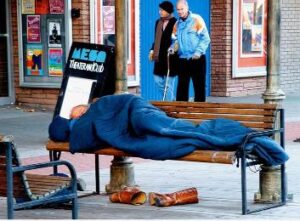
The majority is rushing this. Four council members voted down a two-week delay that would have allowed more community input and expert consultation. They want this done fast.
The mayor controlled the conversation. Laurel Lutz repeatedly tried to keep the discussion focused on scheduling and procedure, steering away from the substance of what these ordinances actually do.
June 3rd is the final vote. No more readings. No more delays. Public comment, discussion, vote—done. One meeting. One chance.The
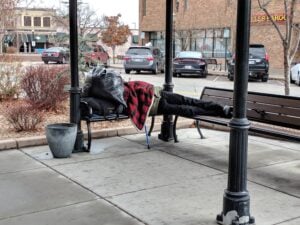
30-day enforcement clock starts immediately if passed. Early July, enforcement begins. Arrests for sleeping outside when shelter is unavailable become legal.
What’s At Stake on June 3rd
Current law: Grand Junction Municipal Code prohibits enforcement of camping bans when no overnight shelter is available.
Proposed change: Remove that protection. Enable arrests even when shelter is unavailable.
Current capacity: 112 shelter beds for 300 unsheltered people (37% capacity). North Avenue shelter closed earlier this year, reducing capacity. The remaining shelter excludes people with pets and may have other barriers.
Council’s plan for building capacity before enforcement: “Conversations ongoing.” No timeline. No concrete plan. No needs assessment completed.
Vote: June 3rd, 2026. Final. If passed, enforcement begins 30 days later.
This is it.
The Project 2025 (pdf) Playbook Comes to Grand Junction
There is a documented national trend of municipalities criminalizing homelessness, and it maps directly to white Christian nationalist policy agendas. Project 2025, the Heritage Foundation’s blueprint for governance, explicitly calls for involuntary commitment and frames poverty as moral failure rather than systemic policy failure. Grand Junction is following this playbook.
Since the Supreme Court’s Grants Pass decision in June 2024, over 320 bills criminalizing unhoused people have been introduced nationwide. Nearly 220 have passed. Cities are removing shelter-availability protections, creating for-profit pipelines from eviction to arrest to detention, and claiming they have no choice.
This is the pattern I documented in a previous article, Grand Junction, Colorado and the Project 2025 Playbook: A Template for Fighting Back. A coordinated Christian nationalist policy rolled out at the municipal level, framed as a local necessity, timed to minimize opposition. Grand Junction is following the script exactly—from the rushed timeline to the false legal justifications to the consent agenda strategy.
They do have a choice. Last night proved it.
Sources:
- City of Grants Pass v. Johnson, 603 U.S. ___ (2024), available at https://www.supremecourt.gov/opinions/23pdf/23-175_19m2.pdf
- The Heritage Foundation, Mandate for Leadership: The Conservative Promise (Project 2025), available at https://www.heritage.org/press/project-2025-publishes-comprehensive-policy-guide-mandate-leadership-the-conservative-promise
The Setup: An Email Sent 71 Minutes Before the Meeting
On May 20th at 4:19 PM—71 minutes before the 5:30 PM City Council meeting—a council member sent an email to approximately 20 residents (including me, although I am no longer a city resident) who had contacted Council about the ordinances.
The email was copied to Interim City Attorney Jeremiah Boies and City Manager Michael Bennett.
The strategy was clear:
- Send email too late to organize response
- Minimize scope (”just one sentence”)
- Discourage same-day attendance (”encourage you to attend June 3rd”)
- Place items on the consent agenda for passage without discussion
- Get legal and administrative cover (city attorney and manager copied)
The email contradicts the council member’s own disclaimer: “I am writing as one member of council, not representing the entire body or the city.” When you copy the city attorney and the city manager, this IS coordinated official messaging.
Here’s the full email, followed by my line-by-line response exposing every lie.

The Council Member’s Email
Dear Neighbors,
As of this morning, I have received approximately 20 emails regarding tonight’s agenda items on camping on public property and along the riverfront. Rather than responding to each one individually, I thought it more efficient to address the common themes in a single response, with everyone blind copied. I have also BCC’d the rest of the council. To be clear, I am writing as one member of council, not representing the entire body or the city.
I want to clarify a few things before our meeting tonight. What this amendment actually does is remove a single sentence from our municipal code, and it’s currently on the consent agenda for its first reading, with the formal public hearing scheduled for June 3rd. While the item may be pulled for discussion tonight, this type of item is generally discussed with public comment during the public hearing. You are welcome to attend tonight and make a public comment, but I would encourage you to plan on attending on June 3rd.
There are a few things I want to clarify based on the emails council received.
The most repeated claim is that there is nowhere for people to go since the North Avenue shelter closed. I certainly understand why people believe that, and I agree that the closure created a real hardship. But the facts are these: the 29 Road shelter is currently operating as the largest shelter between Lakewood, Colorado, and Salt Lake City, Utah, with 112 beds. As of March of this year, that shelter was operating at an average occupancy of 59 individuals, so roughly half of its available capacity.
Shelter space does exist in our community right now. Based on my personal conversations with local service providers, the number of truly unsheltered individuals in Grand Junction (people actually living outside or in vehicles) is estimated at around 300, with some portion of that number already utilizing available shelter. What I am saying is that the people currently camping along our rivers do have other options, but are choosing not to use them. I know it is not always as simple as that. I recently spoke with an unhoused woman who was in tears because, although a bed was available to her, she would not leave her dog, and the shelter does not allow pets. I love my dogs, and I completely understand why she would not abandon hers. That is a challenge worth solving.
Here’s the broader picture from my perspective: of the roughly 300 truly unsheltered individuals in our community, a portion are already utilizing available shelter beds. So, while we do have several shelter and transitional housing programs actively serving this population, more capacity is needed, particularly heading into winter, and that conversation is ongoing. But the claim that there is simply no alternative to camping along the river is not supported by the facts.
What this amendment actually does is remove a single sentence from our municipal code. This sentence was written in 2019 to comply with a Ninth Circuit federal court ruling that the United States Supreme Court overturned in 2024 in City of Grants Pass v. Johnson. That’s it. This change is necessary simply because the constitutional justification for that language no longer exists. Additionally, the change gives our officers the ability to access a tool when public safety, public health, and environmental conditions require it.
Several emails we received suggested that this small change would lead to mass enforcement actions. I would encourage you to look at the city’s record. The Grand Junction Police Department has actively worked in these camps since 2011 to connect people to services, work toward voluntary compliance, and give people time. In the last three years of police work in the riverfront camps, they issued 17 tickets total, with several of those going to the same individuals who repeatedly refused every other option. That is not the record of a department seeking to criminalize poverty, and this ordinance change does not make it one. If you want to learn more, I encourage you to watch the video from our May 4th workshop, where we discussed this issue at length: https://grandjunctionco.portal.civicclerk.com/event/3785/files
I also want to address something that none of the approximately 20 emails I received touched on. In a drought year, the wildfire risk created by these camps along our river corridor should concern anyone who cares about our ecosystem. Additionally, between 2022 and 2025, our city has spent $460,485 removing nearly 119 tons of debris from river encampments. This included propane tanks, needles, human waste, mattresses, discarded clothing, and everything else you can imagine, all of it concentrated in some of our most precious riparian areas. Some of those same sites have been cleaned five or six times. I would imagine many of the people who emailed us on this topic care deeply about the environment. I do too. But it is hard to reconcile that concern with encouraging the city to allow those conditions to continue along our river when those same acts against our environment would be immediately and aggressively prosecuted if a business or recreational user were responsible for them. The standard should be consistent.
This city has not abandoned its homeless population. In 2024 alone, the city invested approximately $1 million in homeless-specific services. In 2025, the city provided $371,784 to Homeward Bound for shelter operations, and in early 2026, an additional $185,000 to keep the North Avenue shelter open as long as possible. The 2026 budget includes $425,000 in direct funding to Hilltop and United Way ($250,000), the Joseph Center ($100,000), and Grand Valley Catholic Outreach ($75,000). On top of that, Grand Valley Catholic Outreach opened Mother Teresa Place in April 2025 (40 units of permanent supportive housing for chronically homeless individuals), a project the city supported with land, impact fee waivers, and direct funding. We have a formal Unhoused Strategy and Implementation Plan adopted by this council. And work is already underway with service providers and the county to develop concrete, actionable next steps on longer-term solutions. This ordinance is one tool & nobody is claiming it is the whole answer.
Cody Kennedy
Grand Junction City Council, District A
Line-by-Line Response to Council Member Email
TIMESTAMP: Email sent at 4:19 PM for a 5:30 PM meeting
RESPONSE: You sent this email 71 minutes before the meeting while “encouraging” residents to skip tonight and attend June 3rd instead. This timing is strategic: too late to organize a response, after most people have left work, and barely time to read it. This is designed to minimize public participation while claiming transparency.
Your email was copied to Interim City Attorney Jeremiah Boies and City Manager Michael Bennett. This contradicts your disclaimer that you’re “writing as one member of council, not representing the entire body or the city.” If the city attorney reviewed this email before sending, the false legal claims are even more concerning.
The Setup and Minimization
LINE 1: “As of this morning, I have received approximately 20 emails regarding tonight’s agenda items on camping on public property and along the riverfront.”
RESPONSE: You refer to “items” (plural) affecting “public property and riverfront.” Tonight’s agenda confirms two separate ordinances, not the “single sentence” you claim later.
LINE 2: “Rather than responding to each one individually, I thought it more efficient to address the common themes in a single response, with everyone blind copied.”
RESPONSE: You sent a mass email 71 minutes before the meeting, instead of engaging with residents who took the time to write out individual concerns. This is not responsiveness. This is damage control.

LINE 3: “I have also BCC’d the rest of the council.”
RESPONSE: Noted. This response is therefore on the record with the full Council.
LINE 4: “To be clear, I am writing as one member of council, not representing the entire body or the city.”
RESPONSE: Yet you’re defending ordinances that will be voted on tonight and explaining Council’s rationale. This is a distinction without a difference.
LINE 5: “I want to clarify a few things before our meeting tonight.”
RESPONSE: “Clarify” implies correcting misunderstandings. What follows are misrepresentations, not clarifications.
LINE 6: “What this amendment actually does is remove a single sentence from our municipal code”
RESPONSE: False. Tonight’s agenda lists:
- Item i: Ordinance amending GJMC 12.04.060 AND 12.04.080
- Item ii: Ordinance amending Riverfront Trail Code
Two separate ordinances. Multiple code sections. Not “a single sentence.”
LINE 7: “and it’s currently on the consent agenda for its first reading”
RESPONSE: Consent agenda items pass without discussion in a single vote. Placing ordinances affecting hundreds of people on the consent agenda is deliberate—you’re hoping for passage without debate.
LINE 8: “with the formal public hearing scheduled for June 3rd.”
RESPONSE: First reading tonight, public hearing June 3rd. If the first reading passes on consent tonight, momentum shifts and opposition becomes harder. This is why the timing matters.
LINE 9: “While the item may be pulled for discussion tonight, this type of item is generally discussed with public comment during the public hearing.”
RESPONSE: “Generally discussed during public hearing” means you prefer no discussion tonight. Consent agenda items that affect hundreds of people are not routine administrative matters.
LINE 10: “You are welcome to attend tonight and make a public comment, but I would encourage you to plan on attending on June 3rd.”
RESPONSE: You’re actively discouraging attendance tonight while giving 71 minutes notice. This is strategic: you want low turnout for consent passage, then claim you held a public process on June 3rd.
The Capacity Lie
LINE 11: “There are a few things I want to clarify based on the emails council received.”
RESPONSE: You received approximately 20 emails expressing concerns. Rather than addressing those concerns, you’re attempting to reframe them.
LINE 12: “The most repeated claim is that there is nowhere for people to go since the North Avenue shelter closed.”
RESPONSE: This isn’t a “claim.” The North Avenue shelter closure is a documented fact that you confirm in your next sentence.
LINE 13: “I certainly understand why people believe that, and I agree that the closure created a real hardship.”
RESPONSE: “People believe that” dismisses resident concerns as perceptions rather than reality. “Real hardship” understates the extent of the reduction in shelter capacity.
LINE 14: “But the facts are these: the 29 Road shelter is currently operating as the largest shelter between Lakewood, Colorado, and Salt Lake City, Utah, with 112 beds.”
RESPONSE: “Largest between Lakewood and Salt Lake” is a geographic spin that is irrelevant to local needs. The relevant fact: 112 beds for 300 unsheltered people = 37% capacity. Inadequate.
LINE 15: “As of March of this year, that shelter was operating at an average occupancy of 59 individuals, so roughly half of its available capacity.”
RESPONSE: “Half full” means access barriers prevent use. You acknowledge one barrier (pets) later. What are the others? Partner separation? Disability accommodations? Sobriety requirements? Curfews conflicting with work schedules? Safety concerns? Waitlists?
If beds have barriers, they are not “available” under current ordinance definitions.
LINE 16: “Shelter space does exist in our community right now.”
RESPONSE: 112 beds for 300 people is not adequate shelter space. This sentence is technically true and functionally misleading.
LINE 17: “Based on my personal conversations with local service providers, the number of truly unsheltered individuals in Grand Junction (people actually living outside or in vehicles) is estimated at around 300”
RESPONSE: “Personal conversations” is not a needs assessment. Where is formal documentation? Methodology? Consultation records? Timeline?
The May 4th workshop summary lists “Housing needs assessment updates” as a FUTURE topic, meaning the assessment is incomplete. You’re voting before completing basic planning.
LINE 18: “with some portion of that number already utilizing available shelter.”
RESPONSE: “Some portion already utilizing shelter” means the 300 number is NET of people currently sheltered. This makes 112 beds for 300+ unsheltered people even worse than 37% capacity.
LINE 19: “What I am saying is that the people currently camping along our rivers do have other options, but are choosing not to use them.”
RESPONSE: If shelter excludes people with pets (your example), separates partners, lacks disability accommodations, or creates safety concerns, those are systemic barriers, not individual choices. You’re framing policy failure as personal failure.
LINE 20: “I know it is not always as simple as that.”
RESPONSE: This acknowledges that the previous statement was too simple, then you proceed to use it anyway.
LINE 21: “I recently spoke with an unhoused woman who was in tears because, although a bed was available to her, she would not leave her dog, and the shelter does not allow pets.”
RESPONSE: You acknowledge shelter is inaccessible to people with pets. This makes shelter “unavailable” under the current ordinance language.
LINE 22: “I love my dogs, and I completely understand why she would not abandon hers.”
RESPONSE: Personal empathy while supporting a policy that criminalizes her situation is hollow.
LINE 23: “That is a challenge worth solving.”
RESPONSE: If it’s “worth solving,” solve it BEFORE removing protections that prevent her arrest. You’re proposing to criminalize her while calling her situation “worth solving.”
LINE 24: “Here’s the broader picture from my perspective: of the roughly 300 truly unsheltered individuals in our community, a portion are already utilizing available shelter beds.”
RESPONSE: You’ve now stated this twice. Repetition doesn’t change math: 112 beds for 300+ unsheltered people is inadequate capacity.
LINE 25: “So, while we do have several shelter and transitional housing programs actively serving this population, more capacity is needed, particularly heading into winter, and that conversation is ongoing.”
RESPONSE: “Conversation is ongoing” means no plan exists. “More capacity is needed” means the current capacity is inadequate. You admit inadequate capacity exists, then support removing protections before building that capacity.
The May 4th workshop summary states: “Consensus was reached to move forward with an ordinance amendment removing the shelter-availability restriction while continuing broader conversations about homelessness resources and partnerships.”
Remove protections now, have conversations later. This is backward.
LINE 26: “But the claim that there is simply no alternative to camping along the river is not supported by the facts.”
RESPONSE: Your own email supports exactly that claim:
- 112 beds for 300 people
- North Avenue closed
- Shelter excludes people with pets (and likely other barriers)
- “More capacity is needed”
- “Conversation is ongoing”
Those ARE the facts.
The Legal Lie
LINE 27: “What this amendment actually does is remove a single sentence from our municipal code.”
RESPONSE: You’ve now claimed “single sentence” twice. Repetition doesn’t make it true. Two ordinances. Multiple code sections. Documented on tonight’s agenda.
LINE 28: “This sentence was written in 2019 to comply with a Ninth Circuit federal court ruling that the United States Supreme Court overturned in 2024 in City of Grants Pass v. Johnson.”
RESPONSE: The City of Grants Pass may criminalize homelessness. It did NOT hold cities MUST remove local protections. Colorado municipalities can maintain standards more protective than federal minimums.
If Grants Pass required removing this language, cite the requirement. You cannot, because it does not exist.
LINE 29: “That’s it.”
RESPONSE: “That’s it” minimizes scope after claiming legal necessity that doesn’t exist.
LINE 30: “This change is necessary simply because the constitutional justification for that language no longer exists.”
RESPONSE: False. The federal floor changed. Cities remain free to maintain higher state or local protections. Spokane, Washington, is currently being sued over similar ordinances under state constitutional protections. Colorado has identical state constitutional language (Article II, Section 20) available at https://law.justia.com/constitution/colorado/cnart2.html
This is a choice, not a legal requirement.
LINE 31: “Additionally, the change gives our officers the ability to access a tool when public safety, public health, and environmental conditions require it.”
RESPONSE: “Access a tool” means enforcement authority. You explicitly state that the purpose is to enable enforcement when shelter is inadequate. This contradicts your claim that this won’t increase enforcement.
LINE 32: “Several emails we received suggested that this small change would lead to mass enforcement actions.”
RESPONSE: You’ve called this “small” three times (single sentence, that’s it, small change). Repetition reveals anxiety about scope, not confidence in minimization.
LINE 33: “I would encourage you to look at the city’s record.”
RESPONSE: I have. The May 4th workshop summary documents it.
LINE 34: “The Grand Junction Police Department has actively worked in these camps since 2011 to connect people to services, work toward voluntary compliance, and give people time.”
RESPONSE: That approach existed BECAUSE current protections limited enforcement. Remove protections, remove constraints.
LINE 35: “In the last three years of police work in the riverfront camps, they issued 17 tickets total, with several of those going to the same individuals who repeatedly refused every other option.”
RESPONSE: 17 tickets in three years is low precisely BECAUSE protections prevented enforcement when shelter was unavailable. This is evidence FOR keeping protections, not removing them.
LINE 36: “That is not the record of a department seeking to criminalize poverty, and this ordinance change does not make it one.”
RESPONSE: If the change doesn’t enable enforcement, why make it? You stated the purpose is to give officers “access to a tool.” That IS enforcement capability.
Either this enables enforcement (contradicting your claim that it won’t increase enforcement), or it’s meaningless (contradicting the need for it). Which is it?
Environmental Pretext
LINE 37: “If you want to learn more, I encourage you to watch the video from our May 4th workshop, where we discussed this issue at length: https://grandjunctionco.portal.civicclerk.com/event/3785/files“
RESPONSE: I have reviewed the May 4th workshop summary. It proves everything residents are saying. More below.
LINE 38: “I also want to address something that none of the approximately 20 emails I received touched on.”
RESPONSE: Because you’re changing the subject to environmental concerns after failing to justify criminalization without alternatives.
LINE 39: “In a drought year, the wildfire risk created by these camps along our river corridor should concern anyone who cares about our ecosystem.”
RESPONSE: Environmental concerns don’t create shelter beds. If you’re genuinely concerned about environmental impact, the solution is adequate shelter capacity and in-camp services (portable toilets, trash collection, harm reduction), not criminalization.
The May 4th workshop summary shows Council discussed “potential use of dumpsters, toilets, and water access near camps”—exactly the harm reduction approach other cities use successfully. You discussed alternatives and chose enforcement instead.
LINE 40: “Additionally, between 2022 and 2025, our city has spent $460,485 removing nearly 119 tons of debris from river encampments.”
RESPONSE: The Business Times reports Grand Junction has seen “more than $62 million invested in subsidized housing and homelessness-related initiatives since 2022 through a combination of city funding and partner investment.”
$62 MILLION invested, yet 300 people remain unsheltered, and you’re citing $460K in cleanup costs as justification?
Provide itemized breakdown: How much went to enforcement/cleanup vs. housing/services? How many housing units were created? How many people are permanently housed? What outcomes were achieved?
If $62 million didn’t solve a problem affecting 300 people, the money was either misspent or went to enforcement rather than solutions.
LINE 41: “This included propane tanks, needles, human waste, mattresses, discarded clothing, and everything else you can imagine, all of it concentrated in some of our most precious riparian areas.”
RESPONSE: Graphic descriptions of camp conditions don’t justify criminalization without alternatives. They justify providing adequate shelter and in-camp services, which the Council discussed and rejected on May 4th.
LINE 42: “Some of those same sites have been cleaned five or six times.”
RESPONSE: If you clean a site five or six times and people return, that proves they have nowhere else to go. This is evidence supporting the need for more capacity, not evidence justifying less protection.
LINE 43: “I would imagine many of the people who emailed us on this topic care deeply about the environment. I do too.”
RESPONSE: Don’t imagine what residents care about. Address what they wrote about.
LINE 44: “But it is hard to reconcile that concern with encouraging the city to allow those conditions to continue along our river when those same acts against our environment would be immediately and aggressively prosecuted if a business or recreational user were responsible for them.”
RESPONSE: False equivalence. Businesses have alternatives. Unhoused people do not, as you’ve only provided 112 beds for 300 people.
LINE 45: “The standard should be consistent.”
RESPONSE: If the standard should be consistent, hold the city to the same standard as businesses: you cannot dump your problems on public land without providing alternatives.
Businesses must manage their waste. The city must manage its housing crisis. Arresting people without providing shelter is not environmental protection.

Funding Without Outcomes
LINE 46: “This city has not abandoned its homeless population.”
RESPONSE: You’re removing protections before building adequate capacity. That is abandonment.
LINE 47: “In 2024 alone, the city invested approximately $1 million in homeless-specific services.”
RESPONSE: The Business Times reports $62 million since 2022. Your email cites $1 million in 2024. These numbers don’t reconcile. Provide complete documentation.
LINE 48: “In 2025, the city provided $371,784 to Homeward Bound for shelter operations, and in early 2026, an additional $185,000 to keep the North Avenue shelter open as long as possible.”
RESPONSE: “As long as possible” means one-time funding to delay closure, not ongoing funding to maintain capacity. The shelter closed anyway.
The city gave temporary money, the shelter closed, capacity decreased, and now you cite inadequate capacity as justification for removing protections. You created the problem you’re using to justify enforcement.
LINE 49: “The 2026 budget includes $425,000 in direct funding to Hilltop and United Way ($250,000), the Joseph Center ($100,000), and Grand Valley Catholic Outreach ($75,000).”
RESPONSE: How does this translate to beds? Housing units? Measurable outcomes? Funding numbers without program details are not evidence of adequate response.
Also: Your email lists roughly $2 million in recent/current funding. Business Times reports $62 million since 2022. Where is the remaining $60 million?
LINE 50: “On top of that, Grand Valley Catholic Outreach opened Mother Teresa Place in April 2025 (40 units of permanent supportive housing for chronically homeless individuals), a project the city supported with land, impact fee waivers, and direct funding.”
RESPONSE: 40 units is excellent. It’s also 13% of documented need (300 unsheltered people). Completely inadequate capacity.
Other Colorado cities built housing at this scale BEFORE removing protections. Phoenix added 1,200 shelter beds before enforcement. Boulder County conducted needs assessments and built coordinated systems. Grand Junction is doing it backward.
LINE 51: “We have a formal Unhoused Strategy and Implementation Plan adopted by this council.”
RESPONSE: Provide public link. What are timelines? Measurable goals? Implementation status? Accountability metrics?
“We have a plan” without documentation is not evidence. The May 4th workshop summary lists “Housing needs assessment updates” as a FUTURE topic, meaning planning is incomplete.
LINE 52: “And work is already underway with service providers and the county to develop concrete, actionable next steps on longer-term solutions.”
RESPONSE: “Work is underway” = no solutions exist. “Longer-term solutions” = not immediate. “Next steps” = still planning.
The May 4th workshop summary states: “Consensus was reached to move forward with an ordinance amendment removing the shelter-availability restriction while continuing broader conversations about homelessness resources and partnerships.”
Remove protections now, have conversations later.
At that same workshop, Mayor Lutz stated: “What’s going to happen is they’re just going to migrate around, and you’re going to be cleaning up in a circle.”
Your own mayor admits this won’t solve homelessness. Why proceed?
LINE 53: “This ordinance is one tool & nobody is claiming it is the whole answer.”
RESPONSE: If it’s not the whole answer, what is the rest? Where are timelines? Where are measurable goals? Where is the plan to build adequate capacity BEFORE enforcement?
The May 4th workshop summary shows that the Council discussed insufficient capacity, expressed concerns about displacement, considered alternatives such as in-camp services, and then chose enforcement anyway.
16 days from the workshop, admitting no capacity to consent to the agenda. Zero time for building alternatives.
Conclusion of Line-by-Line Response
This email contains 53 lines of misrepresentation:
- Two ordinances framed as “one sentence”
- Legal requirements that don’t exist
- Inadequate capacity framed as sufficient
- Systemic barriers framed as individual choice
- One-time funding framed as ongoing support
- Incomplete planning framed as existing strategy
- Enforcement tool framed as not enforcement
Your own May 4th workshop summary proves:
- “Lack of sufficient shelter capacity” acknowledged
- Alternatives discussed and rejected
- Concerns about displacement were raised and ignored
- Housing needs assessment incomplete
- “Broader conversations” means no concrete plan
The Smoking Gun: May 4th Workshop Summary
The official May 4th City Council Workshop Summary is a public document. Here’s what it reveals:
Council Admitted Insufficient Capacity
Direct quote from summary:
“Topics included: Lack of sufficient shelter capacity”
Council discussed a “lack of sufficient shelter capacity” in the same meeting in which they decided to remove protections.
Council Admitted No Plan Exists
Direct quote:
“Consensus was reached to move forward with an ordinance amendment removing the shelter-availability restriction while continuing broader conversations about homelessness resources and partnerships.”
Translation: Remove protections now, have conversations about solutions later.
Council Discussed Alternatives and Rejected Them
Direct quote:
“Topics included: Potential use of dumpsters, toilets, and water access near camps”
This is the harm-reduction approach that San Francisco, Portland, and other cities use successfully. Grand Junction discussed it and chose enforcement instead.
Council Acknowledged the Harm
Direct quote:
“Concerns about simply displacing people without alternatives”
Councilmembers raised this concern at the workshop. Sixteen days later, they put the ordinances on the consent agenda.
Housing Needs Assessment Not Complete
Under “Next Workshop Topics”:
“Housing needs assessment updates”
“Updates” means it’s not done. Council is voting on enforcement BEFORE completing a basic needs assessment.
Council is Hostile to Advocacy
The workshop summary documents the discussion about the Urban Trails Committee:
- Described UTC communications as “adversarial”
- Claimed “misleading statistics presented”
- Cited “perceived politicization”
- Refused UTC representation on Housing Task Force
Council views critical feedback as adversarial and excludes advocates from decision-making.
The Timeline Proves Bad Faith
- May 4th: Workshop discussing “lack of sufficient shelter capacity” and “future conversations”
- May 20th: Ordinances on consent agenda for first reading
- June 3rd: Public hearing and final vote
16 days from admitting no capacity to the first reading. Zero time for building alternatives.
View the full workshop video: https://grandjunctionco.portal.civicclerk.com/event/3785/files
The $62 Million Question
According to The Business Times coverage of the May 4th workshop, Grand Junction has seen “more than $62 million invested in subsidized housing and homelessness-related initiatives since 2022 through a combination of city funding and partner investment.”
$62 million.
The results:
- 300 people are still unsheltered
- North Avenue shelter closed
- One shelter is operating at half capacity
- Council removing protections
Where did the money go?
The council member’s email lists approximately $2 million in recent funding. That leaves $60 million unaccounted for.
Demands:
- Itemized breakdown of all $62 million
- How much went to enforcement/cleanup vs. housing/services
- How many housing units were created
- How many people are permanently housed
- Current program outcomes
If $62 million didn’t solve a problem affecting 300 people, either:
- The money was misspent, OR
- It went to enforcement rather than solutions
Provide the data.
What You Need to Do for June 3rd
When: June 3rd, 2026, 5:30 PM
Where: Grand Junction City Hall, 250 North 5th Street
What’s at stake: Final vote on both ordinances. 30-day enforcement begins if passed.
Action Items:
1. ATTEND IN PERSON
Bring more people than showed up last night. This is the final vote. Show Council the community is watching.
2. SUBMIT WRITTEN TESTIMONY
Email testimony to the City Clerk before June 3rd. Include:
- Your name and address
- Subject: Opposition to Ordinances Removing Homeless Protections
- Key points: inadequate capacity (112 beds for 300 people), no needs assessment completed, $62M unaccounted for, May 4th workshop admitted insufficient capacity, alternatives discussed and rejected
3. CONTACT COUNCIL MEMBERS THIS WEEK
Don’t wait until June 3rd. Call and email now.
THANK THESE COUNCIL MEMBERS:
- Scott Beilfuss – voted for more community input
- Jason Nguyen – voted for more community input
PRESSURE THESE COUNCIL MEMBERS:
- Laurel Lutz (Mayor) – voted to rush, tried to avoid discussing substance
- Robert Ballard – voted to rush
- Anna Stout – voted to rush
- Ben Van Dyke – voted to rush
- Cody Kennedy– sent the email; vote unclear
Your message: “I oppose removing shelter-availability protections before building adequate capacity. The May 4th workshop summary shows that the Council admitted insufficient capacity exists. Scott and Jason voted to delay for more community input—you voted to rush. Provide complete documentation before voting: needs assessment, $62M breakdown, capacity timeline, implementation plan.”
Contact information: Find council member contact details at https://www.gjcity.org/government/city-council/
4. DEMAND DOCUMENTATION BEFORE THE VOTE
Council must provide:
- Complete text of both ordinances (not summaries)
- Itemized breakdown of $62 million invested since 2022
- Formal needs assessment (not “personal conversations”)
- Timeline for building adequate capacity to meet documented need
- Public link to Unhoused Strategy and Implementation Plan
- Legal analysis claiming Grants Pass requires this (it doesn’t)
If they vote without this documentation, they’re voting blind.
5. ASK THESE QUESTIONS AT THE MEETING
For Mayor Lutz:
“At the May 4th workshop, you stated: ‘What’s going to happen is they’re just going to migrate around, and you’re going to be cleaning up in a circle.’ You admit this won’t solve homelessness. Why proceed?”
“Last night you tried to steer the discussion away from substance and toward procedure. Why? If these ordinances are as justified as the email claimed, why avoid discussing them?”
For City Attorney Jeremiah Boies:
“Did you review the May 20th email before it was sent? Did you approve the claim that removing these protections is legally required under Grants Pass? If so, provide the legal analysis. If not, why were you copied on an email containing false legal claims?”
“Has the city analyzed whether Colorado’s state constitutional protections provide independent grounds to maintain these protections, similar to the ACLU’s argument in Spokane, Washington?”
For all council members who voted to rush:
“Scott and Jason wanted two more weeks for community input and expert consultation. You voted no. Why are you rushing this?”
“The May 4th workshop summary shows you admitted insufficient capacity, discussed alternatives like in-camp services, and raised concerns about displacement. You chose enforcement anyway. Why?”
6. SHARE THIS POST
Text it. Email it. Post it to social media. Get more people to June 3rd than showed up last night.
This Is a Choice, Not a Requirement
The council member’s email claimed that removing these protections is legally required because of the Supreme Court’s Grants Pass decision.
This is false.
Grants Pass said cities CAN criminalize homelessness. It did NOT say cities MUST remove local protections. Cities across the country are making different choices. Some are building capacity before enforcement. Others are maintaining local protections stronger than federal minimums.
Grand Junction is choosing enforcement over solutions.
They’re choosing to remove protections before building adequate capacity.
They’re choosing to rush this to a vote while “conversations are ongoing” about building shelter.
They’re choosing to ignore their own May 4th workshop, where they admitted insufficient capacity exists and discussed alternatives.
They spent $62 million with unclear outcomes and 300 people still unsheltered, yet they’re citing $460K in cleanup costs as justification for criminalization.
These are choices. Not requirements.
Last night proved community pressure works. People showed up with 71 minutes notice. Items were pulled from the consent agenda. Scott and Jason voted for more time and more community input.
The majority rushed anyway. They want this done June 3rd.
Make them choose differently.
Show up. Speak up. Demand documentation. Ask hard questions. Thank Scott and Jason. Pressure the majority. Make it impossible for Council to claim they didn’t know capacity was inadequate or that alternatives existed.
June 3rd is the final vote.
Rights without enforcement are just promises.
See you there.
Marcella Schieffelin
Justice Care: Beyond the Headlines
Rights without enforcement are just promises.